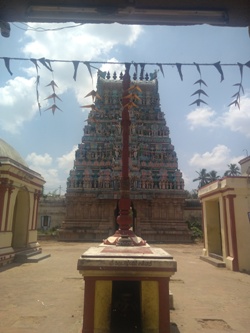
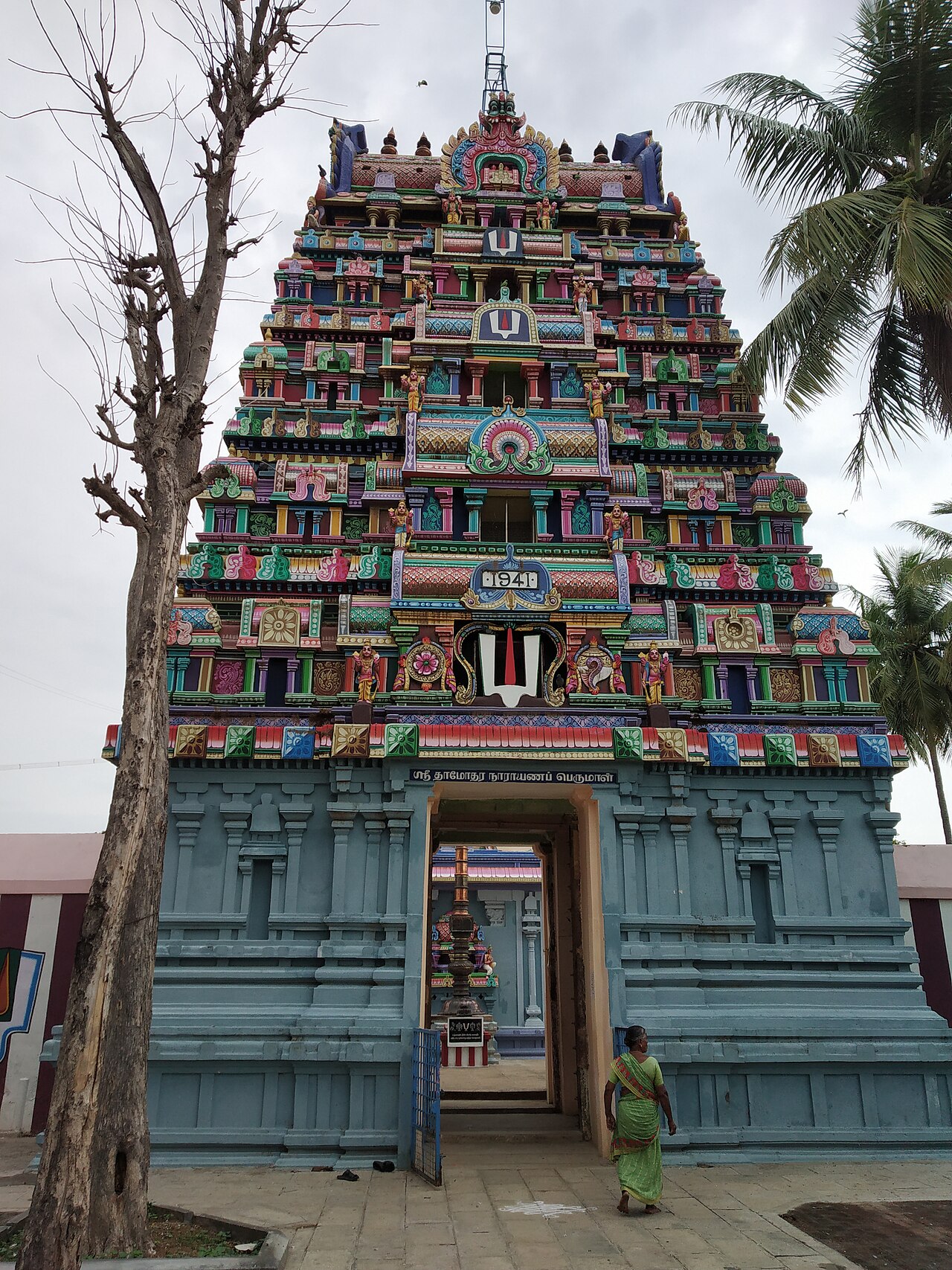
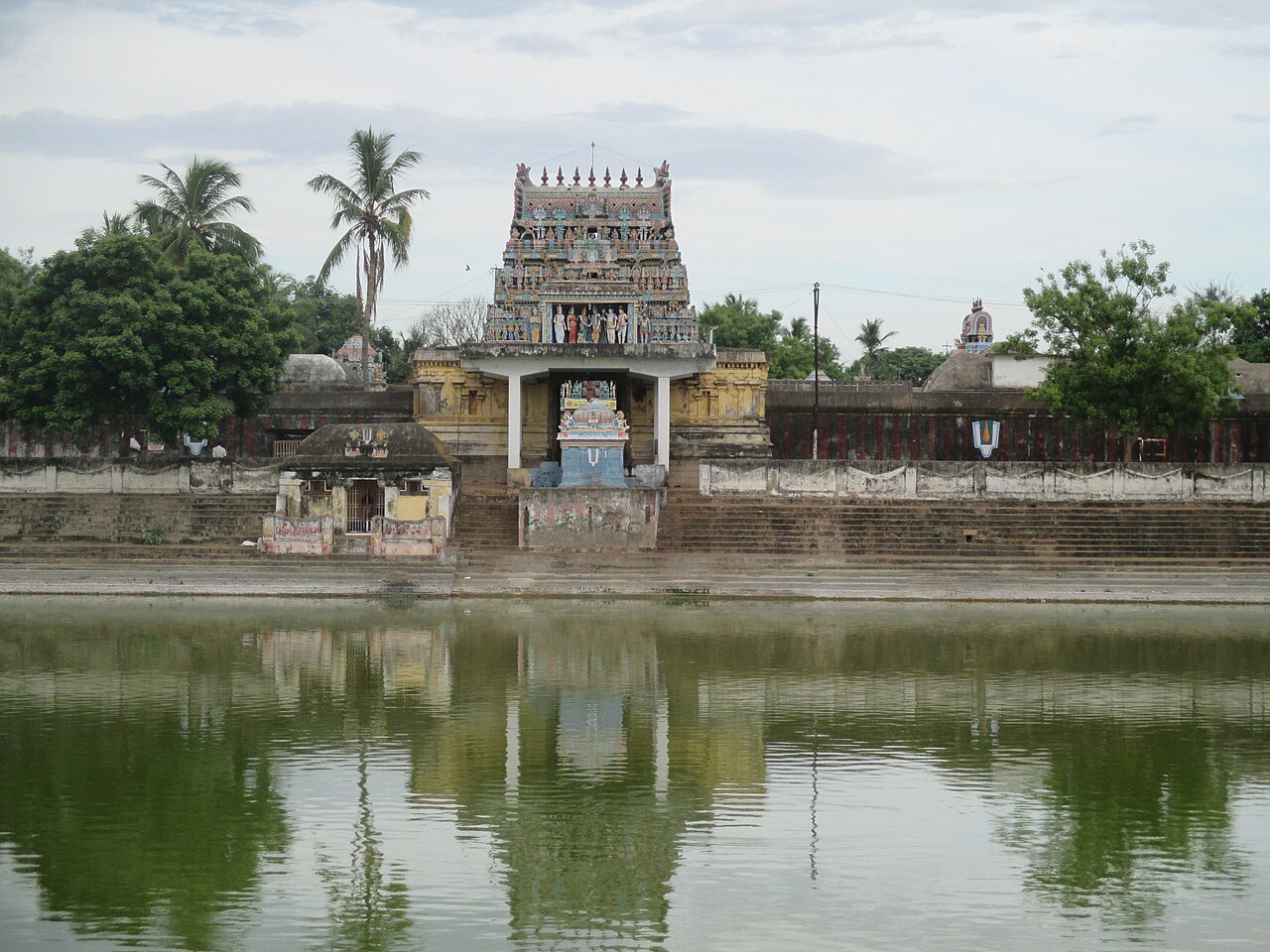
Sowriraja Perumal Temple, Thirukkannapuram
Thirukkannapuram
Ssriram mt · CC BY-SA 4.0 · source
Has more hymns dedicated to it than any Divya Desam except Srirangam; foremost of the Pancha Krishna Kshetrams.
Sthala Purāṇam
Sri Sowriraja Perumal Temple at Thirukkannapuram, near Nagapattinam, enshrines the Lord as Neelamegha Perumal, the moolavar standing form bearing shankha and chakra, while the celebrated utsava deity is Sowriraja Perumal; the Thayar is Kannapura Nayaki. It is reckoned among the five Krishnaranya (Pancha Krishna) Kshetrams. The famous legend explaining the name Sowriraja tells of a poor priest who, having reused a worn garland, was questioned by a visiting king who found a strand of hair upon it; the priest declared it the Lord's own hair, and when the king returned, Neelamegha Perumal revealed his long flowing locks (sowri), thus becoming Sowriraja, the Lord with the splendid tresses. In the Vibhishana legend, that devotee longed to behold the Lord's graceful gait, which the reclining Ranganatha of Srirangam could not display; the Lord summoned him to Thirukkannapuram, where he revealed his divine walk. A further Padma Purana account tells of the flying king Uparisravas Vasu, who mistakenly assailed sages and was subdued by Vishnu appearing as a sixteen-year-old youth. The Nithya Pushkarani fronts the temple, sanctifying bathers on all days, and the shrine rises beneath the Utpalaavataka Vimanam. Among the most glorified of Divya Desams, it is sung in many pasurams, the greatest number by Thirumangai Alvar, with hymns also by Nammalvar, Kulasekhara Alvar, Andal, and Periyalvar. Here the Lord is said to have instructed Thirumangai Alvar in the Thirumandiram, earning it the name Maha Mandira Siddhi Kshetram.
Mangalāśāsanam — the Āḻvār pāsurams
The Lord Neelamegha Perumal (Sowriraja Perumal) with Kannapura Nayaki of Thirukkannapuram is glorified by:
Thirukkannapuram (Sowriraja Perumal / Neelamegha Perumal Temple), near Nagapattinam in the Chola Nadu region, is among the most extensively glorified of the 108 Divya Desams. The moolavar is the standing Neelamegha Perumal bearing conch and discus; the celebrated utsava murti is Sowriraja Perumal (the Lord of the splendid flowing tresses, 'sowri' = hair), with Kannapura Nayaki Thayar. It is one of the five Krishnaranya (Pancha Krishna) Kshetrams. This abode received the mangalasasanam of five Alvars: Periyalvar, Andal, Kulasekhara Alvar, Nammalvar, and Thirumangai Alvar — with the largest body of hymns by Thirumangai Alvar. Together with Nachiyar Koil, Thirukkannapuram is one of only two Divya Desams that Thirumangai Alvar honoured with a full century of verses (he sang several decads in his Periya Thirumozhi, including the run beginning at 8.1 'silai ilangu', and decads at 8.2, 8.3, 8.4, etc.). Nammalvar devoted the decad Thiruvaymozhi 9.10 ('mAlai naNNi') to this Lord, a celebrated hymn exhorting surrender to the Lord's archa form here, promising the destruction of one's karmic sorrows. The shrine is traditionally counted as having been praised in around 129 hymns overall. Sri Vaishnava tradition holds that the Lord here instructed Thirumangai Alvar in the Thirumandiram (the Ashtakshara/Tirumandiram esoteric teaching), earning the temple the epithet Maha Mandira Siddhi Kshetram. The temple stands beneath the Utpalavataka Vimanam, fronted by the Nithya Pushkarani. Representative pasurams returned here are confidently sourced from divyaprabandham.koyil.org (KOYIL): the opening and concluding verses of Thirumangai Alvar's first Thirukkannapuram decad (Periya Thirumozhi 8.1.1 and 8.1.10), the phala-sruti of his decad at 8.4.10, and the opening verse of Nammalvar's Thiruvaymozhi 9.10.1.
சிலையிலங்கு பொன்னாழி திண்படைதண்டு ஒண்சங்கம் என்கின்றாளால், மலையிலங்கு தோள் நான்கே மற்றவனுக்கு எற்றேகாண் என்கின்றாளால் முலையிலங்கு பூம்பயலை முன்போட அன்போடி இருக்கின்றாளால் கலையிலங்கு மொழியாளர் கண்ணபுரத்து அம்மானைக் கண்டாள் கொல்லோ!
silai ilangu ponnAzhi thiN padai thaNdu oNsangam enginRALAl malai ilangu thOL nAngE maRRavanukku eRRE kAN enginRALAl mulai ilangu pUm payalai munbOda anbOdi irukkinRALAl kalai ilangu mozhiyALar kaNNapuraththu ammAnaik kaNdAL kolO?
Parakala Nayaki's mother repeats her love-stricken daughter's words: 'The shining golden discus (chakra), the strong sword and mace, the radiant conch — these she names!' 'His four mountain-like shoulders — what indeed can rival them!' she says. With the pallor of love-sickness rising on her breast, she sits absorbed in love. Has this maiden, whose speech shines like sacred lore, seen and beheld the Lord (ammAn) of Thirukkannapuram?
மாவளரு மென்னோக்கி மாதராள் மாயவனைக் கண்டாள் என்று காவளரும் கடிபொழில்சூழ் கண்ணபுரத்து அம்மானைக் கலியன் சொன்ன பாவளரும் தமிழ்மாலை பன்னியநூல் இவை ஐந்தும் ஐந்தும் வல்லார் பூவளரும் கற்பகம்சேர் பொன்னுலகில் மன்னவராய்ப் புகழ் தக்கோரே.
mAvaLaru mennOkki mAdharAL mAyavanaik kaNdAL enRu kAvaLarum kadipozhil sUzh kaNNapuraththu ammAnaik kaliyan sonna pAvaLarum thamizh mAlai panniya nUl ivai aindhum aindhum vallAr pUvaLarum kaRpagam sEr ponnulagil mannavarAy pugazh thakkOrE
These verses — sung by Kaliyan (Thirumangai Alvar) about the Lord (ammAn) of Thirukkannapuram, which is surrounded by fragrant flowering groves — tell of the doe-eyed, tender-glancing maiden (Parakala Nayaki) who beheld the wondrous Lord (Mayavan). Those who can master these ten flourishing Tamil garland-verses, this well-wrought work, will reign as kings, worthy of all praise, in the golden world (Paramapadam) where the wish-granting Karpaga tree blossoms.
கரையெடுத்த சுரிசங்கும் கனபவளத் தெழுகொடியும், திரையெடுத்து வருபுனல்சூழ் திருக்கண்ணபுரத்து உறையும், விரையெடுத்த துழாயலங்கல் விறல்வரைத்தோள் புடைபெயர வரையெடுத்த பெருமானுக்கு இழந்தேன் என் வரிவளையே.
karaiyeduththa surisangum kanapavaLath thezhukodiyum, thiraiyeduththu varupunalsUzh thirukkaNNapuraththu uRaiyum, viraiyeduththa thuzhAyalangal viRalvaraiththOL pudaipeyara varaiyeduththa perumAnukku izhandhEn en varivaLaiyE.
She laments: I have lost my striped bangles to the great Lord who dwells in Thirukkannapuram — a town encircled by waters whose surging waves cast up curved (spiralled) conches and tall coral creepers — the Lord who, His mighty mountain-like shoulders adorned with a swaying fragrant thiruthuzhai (tulasi) garland, lifted up the (Govardhana) mountain.
மாலை நண்ணித் தொழுதெழுமினோ வினை கெட காலை மாலை கமல மலர் இட்டு நீர் வேலை மோதும் மதிள் சூழ் திருக்கண்ணபுரத்து ஆலின்மேல் ஆல் அமர்ந்தான் அடி இணைகளே
mAlai naNNith thozhudhezhuminO vinai keda kAlai mAlai kamala malar ittu nIr vElai mOdhum madhiL sUzh thirukkaNNapuraththu Alin mEl Al amarndhAn adi iNaigaLE
O devotees, acquiring great love (mAlai = affection), worship and rise up so that your karma/sorrows are destroyed. Offering fresh lotus flowers without distinction of morning or evening (kAlai mAlai), worship the paired divine feet (adi iNai) of the Lord who reclines/rests on a banyan leaf (Alin mEl), residing in Thirukkannapuram which is encircled by ramparts (madhiL) battered by the surging waves of the ocean (vElai mOdhum).
silai ilangu ponnAzhi thiN padai thaNdu oNsangam enginRALAl / malai ilangu thOL nAngE maRRavanukku eRRE kAN enginRALAl / mulai ilangu pUm payalai munbOda anbOdi irukkinRALAl / kalai ilangu mozhiyALar kaNNapuraththu ammAnaik kaNdAL kolO?
In the voice of a mother recounting her love-stricken daughter (Parakala Nayaki), the verse marvels at the Lord's shining weapons (the discus, the sword, the mace, the conch) and his four mountain-like divine shoulders, and asks whether the girl has truly beheld and worshipped to her heart's content Saurirajan, the Lord who is graciously present at Thirukkannapuram — this being the opening pasuram of Thirumangai Alvar's first decad on the shrine.
mAvaLarum mennOkki mAdharAL mAyavanaik kaNdAL enRu / kAvaLarum kadipozhil sUzh kaNNapuraththu ammAnaik kaliyan sonna / pAvaLarum thamizh mAlai panniya nUl ivai aindhum aindhum vallAr / pUvaLarum kaRpagam sEr ponnulagil mannavarAy pugazh thakkOrE
The concluding (phala-sruti) verse of the decad: Kaliyan (Thirumangai Alvar) sang this Tamil garland of ten verses about the Lord (Saurirajan) who is graciously present at Thirukkannapuram, surrounded by fragrant groves, in the mood of a doe-eyed lady who has seen the wondrous Lord. Those who master these ten verses will rule and be honoured as the praiseworthy in the golden world adorned with the wish-fulfilling Kalpaka trees.
vaNdamarum sOlai vayalAli nal nAdan / kaNda sIr venRik kaliyan oli mAlai / koNdal niRavaNNan kaNNapuraththAnai / thoNdarOm pAda ninaindhUdhAy kOl thumbI!
Addressing a bee (kol thumbi) as a messenger, the Lord of the fertile land of Thiruvali (Thirumangai Alvar, 'kaliyan') asks it to remember that we, the servitors, sing this garland of melodious verses on the cloud-hued Lord residing at Thirukkannapuram, and to carry his fragrance so that the devotees' sorrows are dispelled. This is the phala-sruti of another of the Alvar's decads on the shrine.
mAlai naNNith thozhudhezhuminO vinai keda / kAlai mAlai kamala malar ittu nIr / vElai mOdhum madhiL sUzh thirukkaNNapuraththu / Alin mElAl amarndhAn adi iNaigaLE
The opening verse of Nammalvar's decad on Thirukkannapuram: 'Develop loving devotion and rise worshipping, that your sins (karmas obstructing enjoyment) may be destroyed; morning and evening offer lotus flowers, without distinction of day or night, at the twin divine feet of the Lord who rested upon the banyan leaf (during the cosmic deluge) and now graciously abides at Thirukkannapuram, girt by ramparts washed by the surging tides of the sea.' The decad exhorts surrender to the archa form of the Lord here.
Tamil text & meaning sourced from divyaprabandham.koyil.org and other Śrī Vaiṣṇava authorities — please cross-check the linked source for the canonical reading.
Read the pāsurams ↗Plan your visit
📍 10.86840, 79.70420
Routes, distances, hotels and restaurants open in Google Maps with live data. Build a phased pilgrimage plan →