Varadharaja Perumal Temple, Kanchipuram
Thiru Kachi (Attigiri / Hastagiri)
IM3847 · CC BY-SA 4.0 · source
One of the three holiest Vishnu shrines of Kanchipuram, famed for the Athi Varadar fig-wood idol.
Sthala Purāṇam
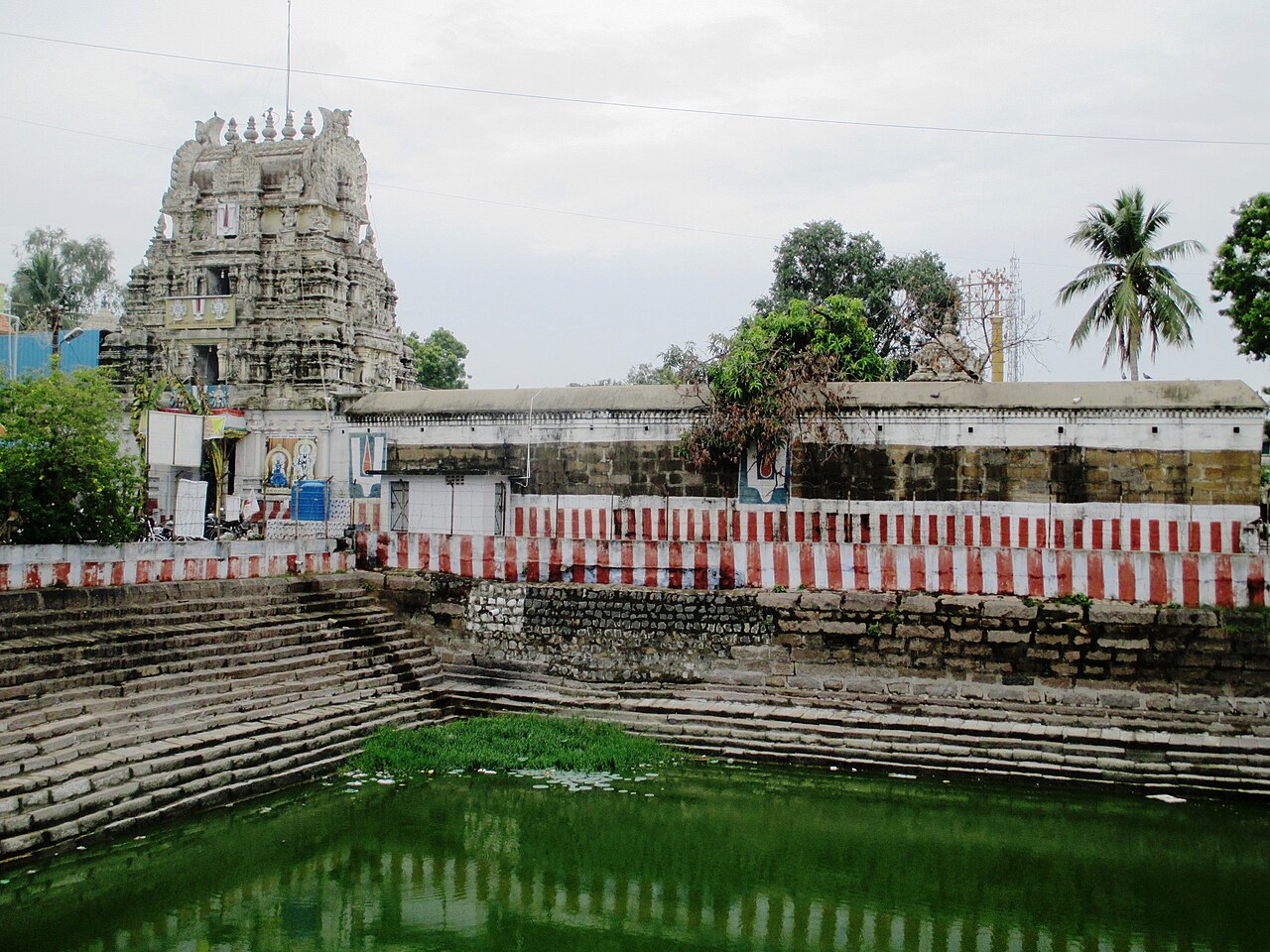
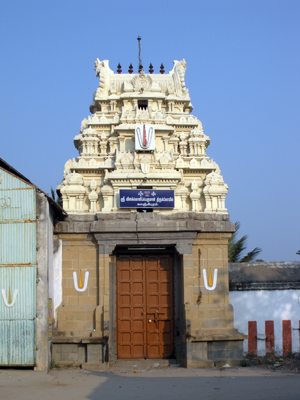
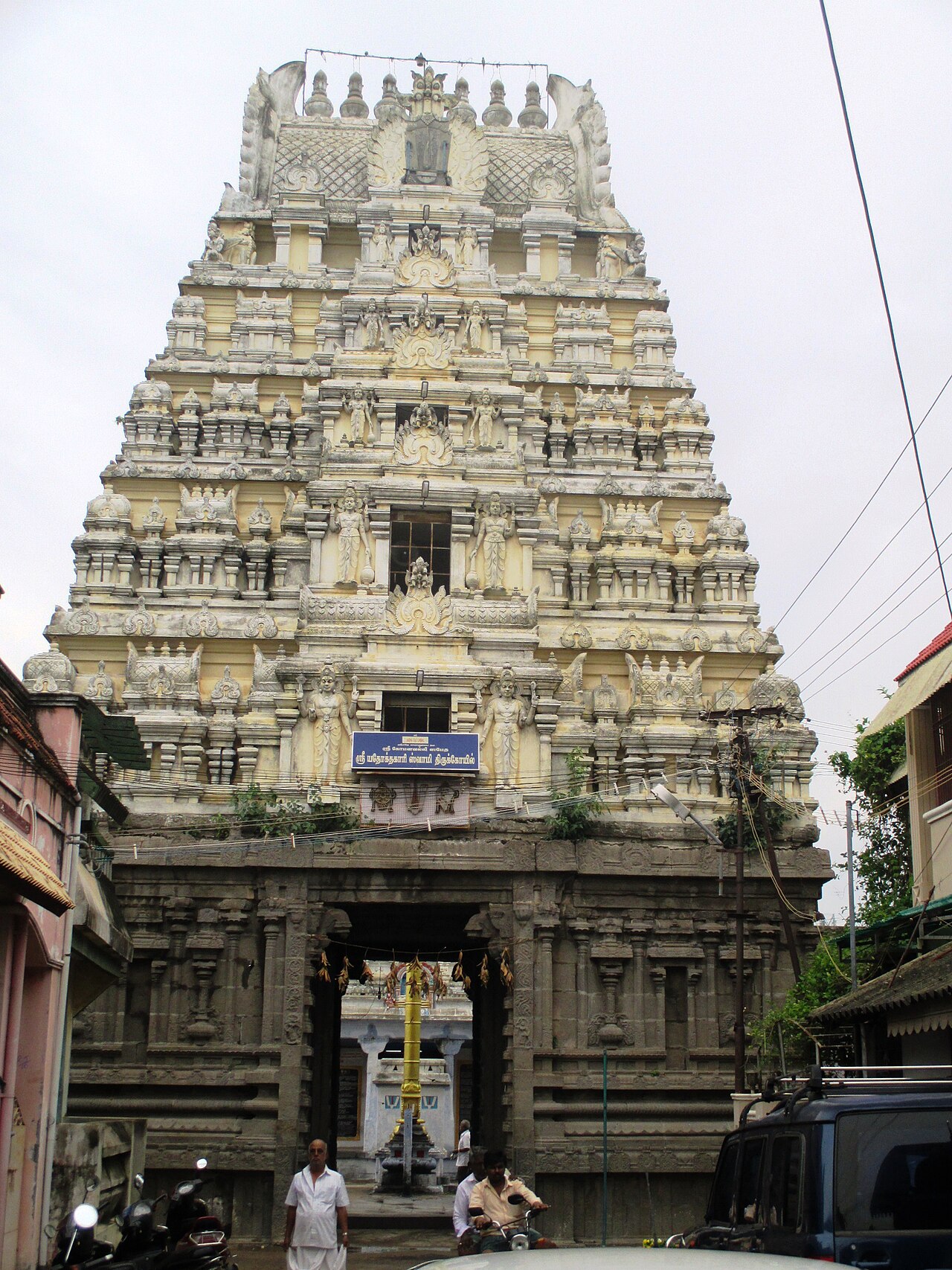
The Varadharaja Perumal Temple in Kanchipuram, Tamil Nadu, is one of the 108 Divya Desams and among the foremost Vaishnava shrines, situated on the small Hastagiri or Attiyuran hill at the eastern end of the city. The sthala puranam tells how Brahma, wishing to behold Vishnu, was told that an Ashwamedha yagna performed at Kanchipuram equals a hundred performed elsewhere. As Brahma conducted the sacrifice, the river Vegavati, a form of Saraswati, rushed to wash away the ritual; Vishnu laid himself across to stem the flow and then emerged from the sacrificial fire within an athi (fig) tree as Varadharaja, the bestower of boons, granting Brahma his wish. The presiding deity is a roughly three-metre granite image in standing posture, with the consort Perundevi Thayar enshrined seated nearby. The temple is famed for the Athi Varadar, a deity carved from fig wood that is kept submerged in the temple tank and brought out for worship only once in forty years, displayed first in reclining posture and then standing. The renowned acharya Ramanuja is associated with the temple, having received answers to his questions through the devotee Thirukkachi Nambigal. Three Alvars sang of it: Thirumangai Alvar, Peyalvar and Bhoothathalvar. Distinctive features include the hundred-pillared hall with a carved stone chain, gilded lizard sculptures over the sanctum, and the towering gopuram, making it one of the largest temples in Kanchipuram, much expanded under the Vijayanagara kings.
Mangalāśāsanam — the Āḻvār pāsurams
The Lord Varadharaja Perumal (Devaraja Perumal) with Perundevi Thayar of Thiru Kachi (Attigiri / Hastagiri) is glorified in 7 pāsurams by:
The Varadharaja (Devarajaswami / Perarulalan) temple on Hastagiri (Attigiri) in Kanchipuram, known in Tamil as Thiru Kachi, is a Thondai Nadu Divya Desam glorified in the Nalayira Divya Prabandham by three Azhwars. According to Wikipedia and divyadesam.com, Thirumangai Alvar sang four pasurams, Bhoothathalvar two, and Peyalvar one, for a combined Mangalasasanam of seven pasurams (matching the temple's traditional count). Thirumangai Alvar's verses (including a reference to 'Kachi' in his Thirunedunthandakam and his Periya Thirumozhi/Iyarpa) and the Iyarpa verses of the two Mudhal Azhwars (Bhoothathalvar and Peyalvar, who belong to the early Andhadhi tradition) extol the Lord of Kanchi who grants boons (Varam tharum-aalan), reclining and standing forms of Vishnu, and the sanctity of the kshetra.
என்னெஞ்ச மேயான் என் சென்னியான், தானவனை வன்னெஞ்சங் கீண்ட மணிவண்ணன், – முன்னம்சேய் ஊழியான் ஊழி பெயர்த்தான், உலகேத்தும் ஆழியான் அத்தியூரான்.
ennenja mēyān en senniyān, thānavanai vannenjang kīṇḍa maṇivaṇṇan, – munnam sēy ūzhiyān ūzhi peyarththān, ulagēththum āzhiyān aththiyūrān.
He who dwells in my heart and rests upon my head, the sapphire-hued Lord who tore open the hard chest of the demon (Hiraṇya); He who from of old was the Lord of the long aeons and who turns the aeons about — the world-praised wielder of the discus — is the Lord of Atthiyur (Attigiri / Hastagiri, the Varadarāja shrine at Kāñchi).
அத்தியூரான் புள்ளை யூர்வான், அணிமணியின் துத்திசேர் நாகத்தின் மேல் துயில்வான், – முத்தீ மறையாவான் மாகடல் நஞ்சுண்டான் தனக்கும் இறையாவான் எங்கள் பிரான்.
aththiyUrAn puLLai UrvAn, aNimaNiyin / thuththisEr nAgaththin mEl thuyilvAn, – muththI / maRaiyAvAn mAkadal nanjuNdAn thanakkum / iRaiyAvAn engaL pirAn.
The Lord of Atthiyur (Attigiri Varadarāja at Kāñchi), who rides the bird (Garuḍa) and reclines upon the jewel-bright, hooded serpent (Ādiśeṣa); He who is the ancient sacrificial fire and the Vedas, who swallowed the poison of the great ocean, and who is Lord even of all the gods above — He is our Master.
சிறந்த என் சிந்தையும் செங்கண் அரவும் * நிறைந்த சீர் நீள் கச்சியுள்ளும் * - உறைந்ததும் வேங்கடமும் வெஃகாவும் வேளுக்கைப் பாடியுமே * தாம் கடவார் தண் துழாயார்.
siRandha en sindhaiyum sengaN aravum * niRaindha sIr nIL kachchiyuLLum * - uRaindhadhuvum vEngadamum vehkAvum vELukkaip pAdiyumE * thAm kadavAr thaN thuzhAyAr.
The Lord adorned with the cool tulasī garland abides in my devoted heart, upon the red-eyed serpent (Ādiśeṣa), and within great Kāñchi (kachchi) of abounding glory, as well as at Vēṅkaṭam (Tirupati), Vehkā (Thiruvehka) and Vēḷukkaippāḍi — these are the abodes He has made His own.
More verses & references (3)
- Thirumangai Alvar glorifies the Lord of Kanchi (Kachi) who graciously grants every boon sought by his devotees, praising the splendour of Attigiri (Hastagiri) and the supreme accessibility of Varadaraja Perumal. (He is credited with four pasurams on this shrine; a reference to 'Kachi' appears in his Thirunedunthandakam.) — Thirumangai Alvar, Periya Thirumozhi / Thirunedunthandakam (Thirumangai Alvar's works) · source ↗
- Bhoothathalvar, one of the first three Azhwars, sings (two pasurams) of the Lord enshrined at Kanchi, contemplating the Lord who measured the worlds and rests for the sake of his devotees. Exact verse text and reference not confidently sourced. — Bhoothathalvar, Iyarpa (Mudhal/Irandam Thiruvandhadhi tradition of the Mudhal Azhwars) · source ↗
- Peyalvar contributes one pasuram glorifying Varadaraja of Kanchi, in the Andhadhi style of the early Azhwars. Exact verse text and reference not confidently sourced. — Peyalvar, Iyarpa (Moonram Thiruvandhadhi tradition of Peyalvar) · source ↗
Tamil text & meaning sourced from divyaprabandham.koyil.org and other Śrī Vaiṣṇava authorities — please cross-check the linked source for the canonical reading.
Read the pāsurams ↗Gallery


.jpg)
.jpg)
Tap an image to view it larger — use ‹ › to browse, ✕ to close. Images via Wikimedia Commons.
Plan your visit
📍 12.81900, 79.72519
Routes, distances, hotels and restaurants open in Google Maps with live data. Build a phased pilgrimage plan →